Every word is available to listen to. Dictionary details are shown only when verified; these are not licensed Oxford entries.
AdeterminerUS /ə/
used before a singular noun to mean one of a group, when it is not a particular one
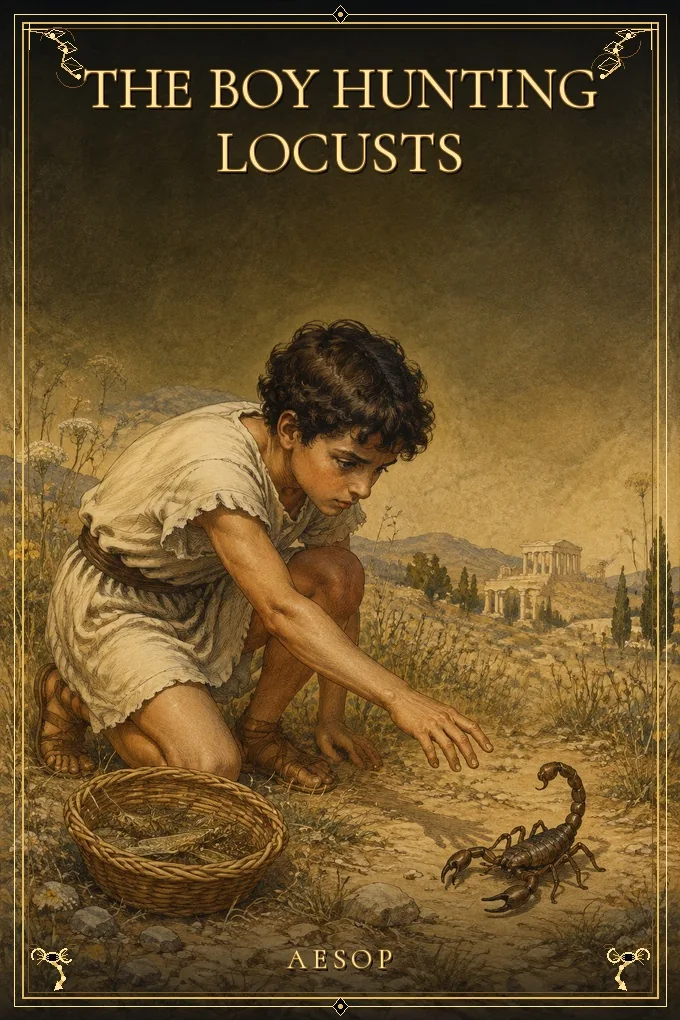
From this reading A BOY was hunting for locusts. He had caught a goodly number,
all
Dictionary entry pending editorial verification. Tap Listen to hear the word.
From this reading my friend, you would have lost me, and all your locusts too!”
andconjunctionUS /ənd/
used to join words or parts of a sentence that go together
From this reading when he saw a Scorpion, and mistaking him for a locust,
BOY
Dictionary entry pending editorial verification. Tap Listen to hear the word.
From this reading A BOY was hunting for locusts. He had caught a goodly number,
butconjunctionUS /bʌt/
used to introduce something that contrasts with what came before
From this reading said: “If you had but touched me,
caught
Dictionary entry pending editorial verification. Tap Listen to hear the word.
From this reading A BOY was hunting for locusts. He had caught a goodly number,
forprepositionUS /fɔːr/
intended to be given to, or used by, somebody
From this reading A BOY was hunting for locusts. He had caught a goodly number,
friend
Dictionary entry pending editorial verification. Tap Listen to hear the word.
From this reading my friend, you would have lost me, and all your locusts too!”
goodly
Dictionary entry pending editorial verification. Tap Listen to hear the word.
From this reading A BOY was hunting for locusts. He had caught a goodly number,
hadauxiliary verbUS /hæd/
the past form of “have”, used to form the past perfect
From this reading A BOY was hunting for locusts. He had caught a goodly number,
hand
Dictionary entry pending editorial verification. Tap Listen to hear the word.
From this reading reached out his hand to take him. The Scorpion, showing his sting,
haveauxiliary verbUS /hæv/
used with a past participle to form the perfect tenses
From this reading my friend, you would have lost me, and all your locusts too!”
HepronounUS /hiː/
a man, boy, or male animal already mentioned, as the subject
From this reading A BOY was hunting for locusts. He had caught a goodly number,
himpronounUS /hɪm/
the male already mentioned, as the object of a verb or preposition
From this reading when he saw a Scorpion, and mistaking him for a locust,
hisdeterminerUS /hɪz/
belonging to a man, boy, or male animal already mentioned
From this reading reached out his hand to take him. The Scorpion, showing his sting,
hunting
Dictionary entry pending editorial verification. Tap Listen to hear the word.
From this reading A BOY was hunting for locusts. He had caught a goodly number,
IfconjunctionUS /ɪf/
on condition that; in the event that
From this reading said: “If you had but touched me,
locust
Dictionary entry pending editorial verification. Tap Listen to hear the word.
From this reading when he saw a Scorpion, and mistaking him for a locust,
locustsplural nounUS /ˈloʊkəsts/
large grasshoppers that can gather in groups and destroy crops
From this reading A BOY was hunting for locusts. He had caught a goodly number,
lost
Dictionary entry pending editorial verification. Tap Listen to hear the word.
From this reading my friend, you would have lost me, and all your locusts too!”
mepronounUS /miː/
the person speaking, as the object of a verb or preposition
From this reading said: “If you had but touched me,
mistaking
Dictionary entry pending editorial verification. Tap Listen to hear the word.
From this reading when he saw a Scorpion, and mistaking him for a locust,
mydeterminerUS /maɪ/
belonging to the person speaking
From this reading my friend, you would have lost me, and all your locusts too!”
number
Dictionary entry pending editorial verification. Tap Listen to hear the word.
From this reading A BOY was hunting for locusts. He had caught a goodly number,
out
Dictionary entry pending editorial verification. Tap Listen to hear the word.
From this reading reached out his hand to take him. The Scorpion, showing his sting,
reached
Dictionary entry pending editorial verification. Tap Listen to hear the word.
From this reading reached out his hand to take him. The Scorpion, showing his sting,
said
Dictionary entry pending editorial verification. Tap Listen to hear the word.
From this reading said: “If you had but touched me,
saw
Dictionary entry pending editorial verification. Tap Listen to hear the word.
From this reading when he saw a Scorpion, and mistaking him for a locust,
ScorpionnounUS /ˈskɔːrpiən/
a small creature with two front claws and a curved tail that can sting
From this reading when he saw a Scorpion, and mistaking him for a locust,
showing
Dictionary entry pending editorial verification. Tap Listen to hear the word.
From this reading reached out his hand to take him. The Scorpion, showing his sting,
stingnounUS /stɪŋ/
the sharp pointed part of an insect or animal that can inject poison
From this reading reached out his hand to take him. The Scorpion, showing his sting,
takenounUS /take/
an important story-specific word used in this passage
From this reading reached out his hand to take him. The Scorpion, showing his sting,
ThedeterminerUS /ðə/
used before a noun that is already known, already mentioned, or the only one of its kind
From this reading reached out his hand to take him. The Scorpion, showing his sting,
toparticleUS /tuː/
used before the base form of a verb to make the infinitive
From this reading reached out his hand to take him. The Scorpion, showing his sting,
too
Dictionary entry pending editorial verification. Tap Listen to hear the word.
From this reading my friend, you would have lost me, and all your locusts too!”
touched
Dictionary entry pending editorial verification. Tap Listen to hear the word.
From this reading said: “If you had but touched me,
wasauxiliary verbUS /wɑːz/
the past form of “be” used with I, he, she, it, or a singular noun
From this reading A BOY was hunting for locusts. He had caught a goodly number,
whenconjunctionUS /wen/
at the time that
From this reading when he saw a Scorpion, and mistaking him for a locust,
wouldmodal verbUS /wʊd/
used for something imagined, polite, or habitual in the past
From this reading my friend, you would have lost me, and all your locusts too!”
youpronounUS /juː/
the person or people being spoken to
From this reading said: “If you had but touched me,
yourdeterminerUS /jɔːr/
belonging to the person or people being spoken to
From this reading my friend, you would have lost me, and all your locusts too!”